In 2027, the most valuable solar panel cleaning robot may not be the one that simply cleans faster. It may be the one that knows when it needs service before a minor issue becomes a missed cleaning cycle, a safety risk, or an expensive site visit.
For solar asset owners, EPC companies, and O&M teams worldwide, AI-powered predictive maintenance is moving robot management from a reactive model to a condition-based model. Instead of waiting for a robot to stop, operators can use live equipment signals to identify early warning signs and schedule service at the right time.
This matters because solar PV is becoming a larger part of the global power system. The International Energy Agency expects solar PV to become the second-largest low-emissions source of electricity generation globally by 2027. As PV fleets grow, every unplanned robot failure can affect cleaning quality, labor planning, and plant performance. The IEA’s 2025 electricity outlook highlights the fast-rising role of solar in global generation. ([iea.org](https://www.iea.org/reports/electricity-2025/supply%C2%A0))
For any Solar Panel Cleaning Robot manufacturer, the opportunity is clear: combine reliable hardware with useful data, simple alerts, and service workflows that help customers lower avoidable O&M costs.
Why Condition Monitoring Is Becoming a Solar O&M Priority
Condition monitoring means checking the real health of equipment while it is working. Think of it like a smartwatch for a cleaning robot. It does not only record that the robot moved. It tracks signs that show whether the robot is moving normally, using too much power, slipping, overheating, or losing cleaning performance.
Traditional preventive maintenance follows a calendar. For example, a team may inspect every robot every 30 or 90 days. This approach is useful, but it can waste service time when a robot is healthy. It can also miss a fault that appears between inspections.
Predictive maintenance adds an extra layer. AI models review patterns in sensor and operating data. They then flag abnormal changes before the equipment reaches a failure point. This helps O&M teams make service decisions based on equipment condition rather than fixed dates alone.
The need is supported by solar O&M guidance. The IEA PVPS guidelines for photovoltaic power plants identify monitoring, forecasting, performance analysis, advanced inspection, and climate-specific maintenance as key parts of effective solar operations. ([iea-pvps.org](https://iea-pvps.org/key-topics/guidelines-for-operation-and-maintenance-of-photovoltaic-power-plants-in-different-climates/))
1. From Basic Alerts to AI Fault Prediction
A basic alert says that a robot has stopped. AI prediction aims to explain what is changing before a stop occurs.
Useful inputs can include motor current, battery voltage, charging cycles, travel speed, wheel slip, brush load, vibration, temperature, route completion rate, and communication quality.
If motor current rises slowly over several cleaning cycles, the cause may be brush wear, dust buildup, bearing friction, or uneven panel contact. The AI system should not make a final diagnosis alone. It should rank the risk and guide a technician toward the most likely inspection point.
2. From Robot Data to Work Orders
Data has little value if it stays inside a dashboard. The real goal is a clear maintenance action.
A strong predictive workflow links robot condition data to maintenance tickets. For example, a “medium-risk battery health” alert can trigger a voltage test during the next planned site visit. A “high-risk drive-system” alert can pause the affected unit and create an urgent inspection task.
This reduces guesswork. It also helps managers group service work by site, robot type, spare parts need, and technician skill.
3. From Fixed Cleaning Plans to Performance-Based Decisions
Cleaning robots should not be managed separately from PV performance. Their work should connect to soiling conditions, weather, production data, and cleaning results.
The U.S. Department of Energy describes a solar-cleaning approach that compares clean and dirty reference cells to measure soiling effects and support a cleaning schedule that balances energy losses against cleaning costs. This DOE example shows why data-based cleaning decisions matter. ([energy.gov](https://www.energy.gov/cmei/success-stories/articles/eere-success-story-plug-and-play-device-streamlines-solar-cleaning))
In 2027, predictive maintenance can extend this logic: clean at the right time, and maintain the robot at the right time.
What AI-Powered Predictive Maintenance Looks Like in Practice
AI does not need to be a black box. In a practical solar cleaning program, it can follow a simple five-step loop:
- Collect: Gather operating data from robots, chargers, weather stations, plant SCADA systems, and cleaning reports.
- Compare: Measure each robot against its own normal pattern and against similar robots working in similar conditions.
- Detect: Find unusual changes, such as repeated route delays, rising motor load, poor charging efficiency, or unstable wireless signals.
- Prioritize: Rank issues by safety impact, production impact, failure likelihood, and service urgency.
- Learn: Feed technician findings back into the system so future alerts become more accurate.
Digital twins can strengthen this process. A digital twin is a virtual model of a physical asset that updates with real-world data. The IEA PVPS report on digitalisation and digital twins notes that these tools can support performance analysis, predictive maintenance, and better decisions across a PV system’s lifecycle. ([iea-pvps.org](https://iea-pvps.org/key-topics/t13-digitalisation-twins-pv-systems-2026/))
Data Signal Map for Solar Panel Cleaning Robots
| Data Signal | Possible Early Warning | Recommended Response |
|---|---|---|
| Motor current trend | Higher friction, overload, brush resistance, or drive wear | Inspect drive train, brush assembly, and contact points |
| Battery voltage and charge time | Battery aging, charger fault, or connector issue | Check battery health, charging path, and connector condition |
| Route completion rate | Navigation issue, obstacle event, wheel slip, or software exception | Review route logs and inspect running surface conditions |
| Temperature and vibration | Bearing wear, poor cooling, loose component, or abnormal load | Inspect mechanical connections and replace worn parts if needed |
| Cleaning-result and soiling data | Weak cleaning effect or mismatch between cleaning frequency and site conditions | Adjust cleaning plan and verify brush condition and cleaning method |
Solar Growth Makes Reliable Cleaning Automation More Important
The case for smarter robot maintenance becomes stronger as global solar deployment expands. The IEA reported that global renewable capacity additions reached 800 GW in 2025, with solar PV accounting for more than three-quarters of new renewable capacity. ([iea.org](https://www.iea.org/reports/global-energy-review-2026/technology-solar-pv-and-wind))
More solar capacity means more modules to clean, more robots to manage, and more pressure on maintenance teams to avoid lost time. Predictive maintenance will not remove every fault. However, it can help teams focus attention on the equipment that needs it most.
Opportunities and Challenges for 2027
Key Opportunities
- Lower unplanned downtime: Detect early equipment changes before they cause a full stop.
- Smarter spare-parts planning: Use condition trends to prepare batteries, brushes, motors, and drive components before field service.
- More efficient labor use: Send technicians with the right parts and the right task list.
- Better cleaning consistency: Link robot health to route completion and cleaning-result data.
- Stronger service models: Offer condition reports, remote diagnostics, and maintenance planning as part of a long-term support package.
Challenges to Manage
- Weak data quality: AI cannot give useful results if sensor data is incomplete, inconsistent, or poorly labeled.
- False alarms: A system must be tested carefully so technicians do not lose trust in alerts.
- Different site conditions: Dust, humidity, wind, slope, module type, and cleaning schedules can change robot behavior.
- System integration: Robot platforms, SCADA, CMMS, and asset-management tools need secure data connections.
- Cybersecurity: Remote monitoring requires clear access control, software updates, and data protection practices.
The future is not “AI replaces technicians.” The better model is “AI helps technicians arrive earlier, better prepared, and with clearer evidence.”
A Practical 2027 Action Plan
- Start with failure history. Review the last 12 to 24 months of robot service records. Identify the faults that caused the most downtime, repeat visits, or replacement cost.
- Choose a small set of useful signals. Begin with battery health, motor current, route completion, charging status, temperature, and communication stability.
- Define alert rules before adding complex AI. Basic thresholds and trend rules create a clean starting point for later machine-learning models.
- Connect alerts to work orders. Every serious alert should have an owner, priority level, recommended inspection action, and close-out record.
- Measure business results. Track unplanned downtime, average repair time, repeat faults, route completion, maintenance travel, and cleaning availability.
- Run a pilot at one representative site. Test the workflow in real dust, weather, and operating conditions before scaling across the fleet.
- Keep humans in the approval loop. Technicians and site managers should validate high-impact maintenance decisions, especially during the model-learning stage.
How Westrong Robotics Can Support the Transition
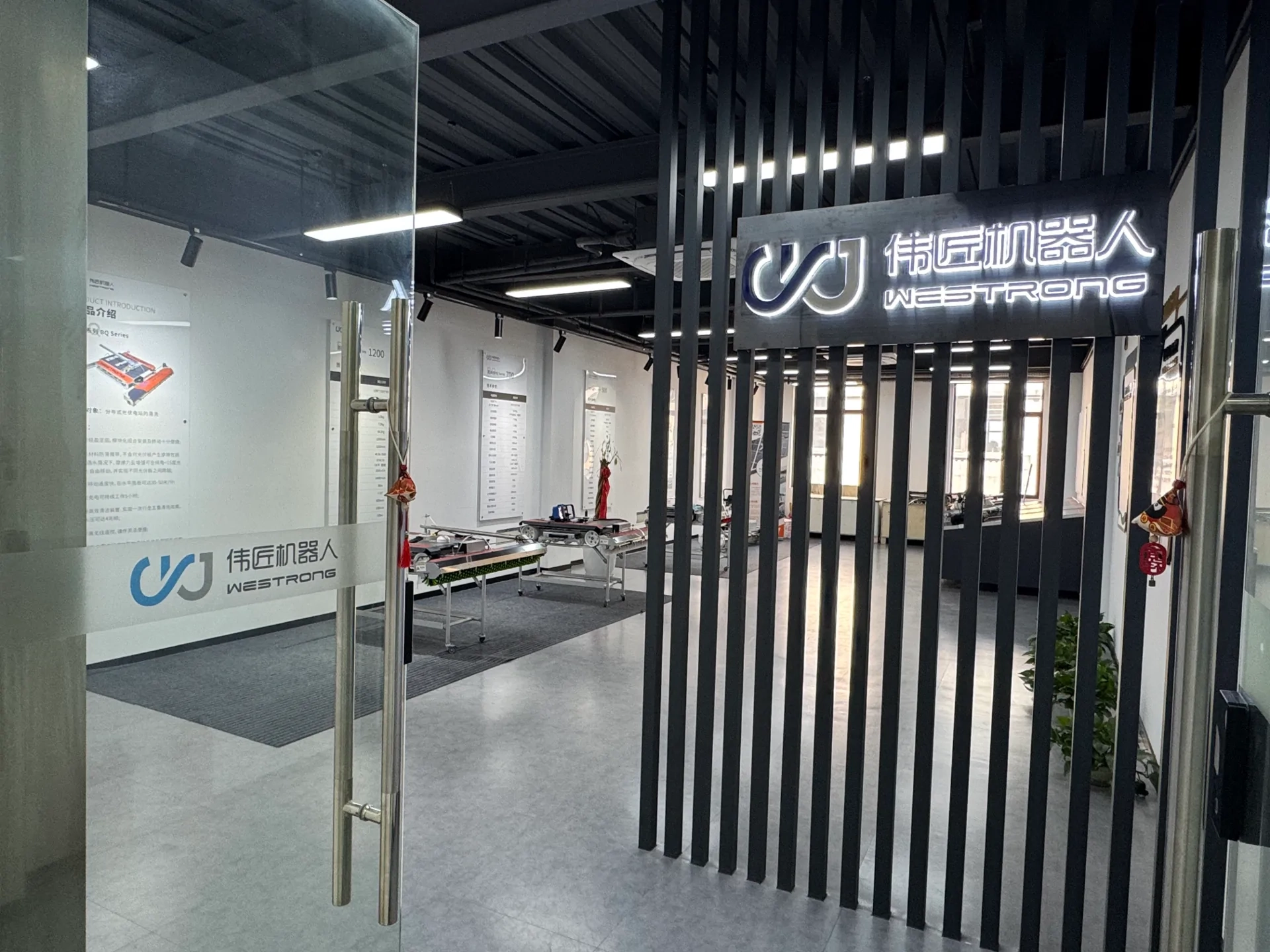
Shanghai Weijiang Robot Technology Co., Ltd., operating as Westrong Robotics, has focused on the research, design, manufacturing, and service of industrial automation robots since 2016. Its core business centers on photovoltaic cleaning equipment designed to help solar plants improve generation efficiency and support safe, stable operation.
Westrong Robotics has expanded its photovoltaic cleaning robot portfolio through product development, scaled production, O&M training, and customized solutions for applications such as dust removal, rust removal, and flexible-panel cleaning. Its planned product direction includes more automated and agile robot lines, creating a strong foundation for condition monitoring and future predictive-maintenance services.
For plant owners and O&M teams, the best path is to combine dependable cleaning hardware with practical data collection, service training, spare-parts planning, and remote support. That is how a Solar Panel Cleaning Robot manufacturer can help turn robot data into lower-risk operations and more controlled O&M spending.
Ready to build a condition-based maintenance plan for your solar cleaning fleet? Request an expert consultation to discuss robot selection, cleaning workflows, maintenance planning, and customized automation solutions.
References
International Energy Agency
- Electricity 2025: Supply — Global outlook for electricity supply and solar PV’s role through 2027.
- Electricity 2026: Supply — Historical data on annual global solar PV generation growth.
- Global Energy Review 2026: Solar PV and Wind — Global renewable capacity additions and solar PV share in 2025.
IEA Photovoltaic Power Systems Programme
- Guidelines for Operation and Maintenance of Photovoltaic Power Plants in Different Climates — Guidance on monitoring, analysis, maintenance, safety, and climate-specific O&M.
- Digitalisation and Digital Twins in Photovoltaic Systems — Overview of digital twins, data models, AI, IoT, and predictive maintenance in PV.
United States Department of Energy
- Solar Operations and Maintenance Resources for Plant Operators — O&M resources covering soiling, system performance, and lifecycle operation.
- Data-Based Solar Cleaning Success Story — Example of using soiling data to balance energy losses and cleaning costs.