Autonomous navigation technology for rooftop solar panel cleaning robots is the set of sensors, control software, drive systems, and safety rules that help a robot move across solar panels, follow planned paths, avoid hazards, and return safely with limited human control.
In the photovoltaic cleaning robot and industrial automation equipment industry, navigation affects cleaning coverage, panel safety, labor use, and operating cost. For large solar power station owners, a reliable navigation system helps create repeatable cleaning work across wide rooftop and distributed PV sites.
What the Technology Includes
1. Position and Surface Detection
A rooftop robot must understand where it is and what is around it. Common tools include wheel encoders, motion sensors, contact sensors, cameras, and edge detection systems.
Wheel encoders estimate travel distance. Motion sensors detect changes in direction and body angle. Contact sensors help detect rails, panel frames, roof edges, and unexpected obstacles. Cameras may provide extra information when the surface, light, or layout requires visual recognition.
The robot does not always need a satellite map. Many rooftop systems use local positioning based on panel rows, travel distance, machine angle, and known boundaries.
2. Path Planning and Row Following
Path planning decides where the robot should move. A typical route follows one panel row, turns at the end, and continues through the next row.
The control system must manage panel gaps, frame height, roof slopes, narrow passages, and changes in surface friction. A good route reduces missed areas and limits repeated travel over the same panel.
For a Distributed PV Cleaning Robot, row following is especially important because distributed sites may have different panel layouts and roof conditions. The robot should support route adjustment instead of relying on one fixed path.
3. Motion Control and Safety Response
Navigation is closely linked to the drive system. Motors, gearboxes, wheels, tracks, brakes, and controllers work together to keep the robot stable.
The system should slow down or stop when it detects an unsafe condition. Important responses include edge protection, obstacle detection, loss of control signal, low battery protection, excessive slope, motor overload, and emergency stop activation.
IP protection describes how an enclosure resists dust and water. The IEC 60529 standard is the recognized reference for IP code classifications. The actual protection level must be confirmed for the complete product and its intended working conditions.
4. Human Control and Autonomous Modes
Different sites need different levels of automation. A rooftop robot may support manual remote control, assisted navigation, automatic row following, or a mixed mode.
Manual control is useful during site inspection and difficult areas. Assisted navigation reduces operator workload while keeping human oversight. Automatic operation is suitable when the panel layout and safety boundaries have been checked.
The term Robot de nettoyage PV autonome usually refers to a PV cleaning robot that can perform planned movement with limited direct control. It does not mean that human supervision is unnecessary.
Core Operating Process
Autonomous navigation normally follows a controlled sequence. The operator first checks the roof and panel layout. The robot then receives a route or operating area. During cleaning, it measures movement and reacts to surface conditions. At the end, it stops or returns to a safe position.
- Inspect the roof, panel rows, access points, slope, gaps, and edge risks.
- Set the working boundary and select manual, assisted, or automatic operation.
- Start the robot and confirm remote response, emergency stop, and battery status.
- Follow the planned route while monitoring position, speed, cleaning action, and obstacles.
- Stop, return, or request operator control when a safety limit is reached.
- Record cleaning results and inspect the robot before the next operation.
Why Navigation Matters to Solar Farm Owners
Dust, dirt, and other deposits can reduce the light that reaches photovoltaic cells. Research from the National Renewable Energy Laboratory examines soiling, cleaning, and abrasion on photovoltaic glass.
Navigation technology helps owners manage this problem in a more controlled way. It can support stable coverage, repeatable routes, fewer unnecessary passes, and better records for maintenance planning.
However, navigation is only one part of the result. Cleaning performance also depends on brush material, brush pressure, water use, wheel design, battery capacity, roof condition, panel frame design, and operator training.
Application in the Photovoltaic Cleaning Equipment Industry
Typical Use Case for a Large PV Site Owner
Consider a large owner with many distributed rooftop PV sites. Each site may have a different roof slope, panel spacing, access route, and level of dust.
The owner can use a Rooftop Solar Panel Cleaning Robot for planned cleaning windows. The site team first completes a condition audit. Technicians then test the robot on representative panel surfaces. After route settings and safety limits are confirmed, operators can use remote or assisted cleaning for routine work.
This approach is useful when the owner needs repeatable service across many sites. It also creates a clear link between site data, equipment settings, cleaning records, and maintenance decisions.
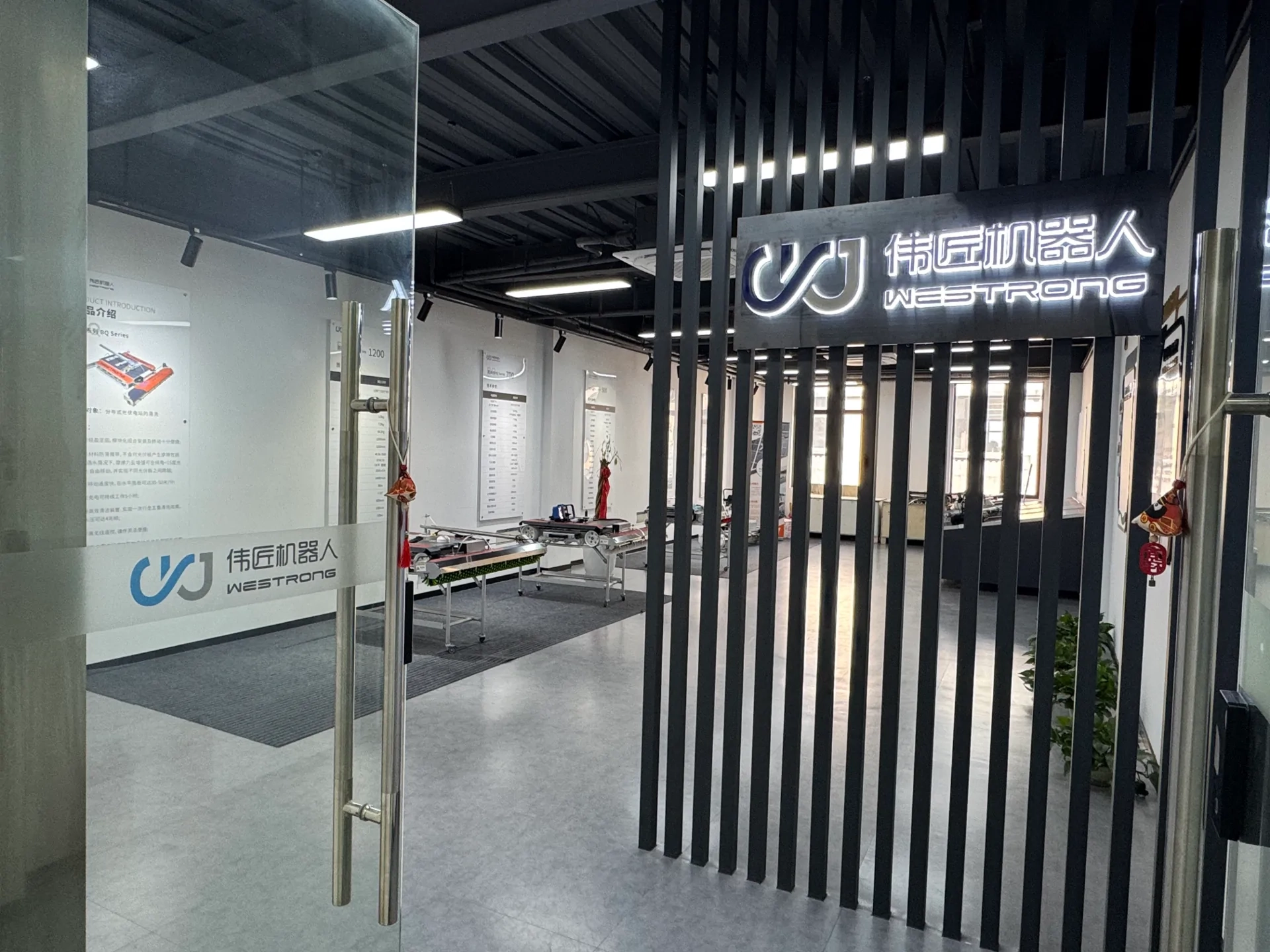
The DQ series from Westrong Robotics is described as an economical remote-controlled cleaning robot for distributed rooftop PV panels. Its development goal is stable operation with a cost-conscious equipment solution. The supplier describes a delivery path that covers technical planning, quotation, prototype development, field testing, optimization, small-batch production, and mass production.
Development, Testing, and Quality Control
Navigation performance should be checked before mass production. A representative test surface can reveal problems that are not visible in a workshop.
Westrong Robotics describes a development process that includes requirement audits, mechanical and drive system design, prototype validation, field testing, optimization, and production preparation. The stated process can also include IP65, CE, and project compliance work when required by the target market.
The manufacturing flow is described as covering requirement review, engineering design, purchasing, precision processing, complete assembly, software installation, calibration, functional testing, performance validation, final inspection, and delivery packaging.
Reported pre-shipment checks include walking, turning, brushing, water flow, battery endurance, obstacle crossing, slope climbing, remote response, and emergency stop functions. Cleaning tests may measure cleaning efficiency, speed, coverage, continuous working time, and cleaning results on real or simulated PV modules.
Incoming quality control is described for motors, batteries, controllers, sensors, aluminum structures, brush groups, and electronic parts. Assembly checks also cover voltage stability, insulation, short-circuit and overload protection, emergency stop operation, and charging safety.
For international projects, compliance must be matched to the destination market. The European Union guidance on CE marking explains that manufacturers must identify applicable EU rules, complete the required conformity assessment, prepare technical documentation, and sign an EU Declaration of Conformity before using the mark where it is required.
How to Evaluate a Navigation System
| Evaluation area | Questions for the project team |
|---|---|
| Coverage | Can the robot clean the full planned area without repeated missed sections? |
| Surface fit | Can it handle the panel frame, gaps, slope, dust, and surface friction at the site? |
| Edge safety | Can it detect or avoid roof edges and other fall risks? |
| Control response | Can the operator stop or redirect the robot quickly? |
| Reliability | Can the robot complete repeated cleaning cycles with stable movement? |
| Serviceability | Can technicians replace brushes, batteries, sensors, and drive parts efficiently? |
| Compliance | Are test records, labels, manuals, and market-specific documents complete? |
Related Reading and Project Support
To discuss a site-specific route, cleaning method, or equipment configuration, contact our technical team for a project consultation.
In the photovoltaic cleaning robot and industrial automation equipment field, Shanghai Weijiang Robot Technology Co., Ltd. supports project planning, product development, manufacturing, delivery, and after-sales service. The company works with large PV power station owners and other industry users to apply navigation, drive, cleaning, and quality control technologies to real operating conditions.
The described production support includes an ISO-compliant factory in Jilin, China, spare-parts logistics, operator training materials, remote technical support, and pre-production field verification. Certification and compliance documents should be confirmed for the exact model, project, and destination market.
Frequently Asked Questions
What is autonomous navigation in a rooftop solar panel cleaning robot?
It is the ability of a robot to estimate its position, follow a planned route, control its movement, and respond to hazards with limited direct control from an operator.
Does autonomous navigation remove the need for human supervision?
No. Human supervision remains important during site inspection, setup, testing, abnormal conditions, and emergency response.
What is the difference between a remote-controlled robot and an autonomous robot?
A remote-controlled robot depends mainly on live operator commands. An autonomous robot can perform part of the route and movement decisions by using sensors, software, and preset safety rules.
Why is site testing important before mass production?
Site testing checks whether the robot matches the real panel surface, slope, frame design, gaps, dust, access conditions, and safety risks. It helps prevent failures after large-scale delivery.
What should PV owners check before buying a cleaning robot?
They should check cleaning coverage, edge protection, obstacle handling, slope ability, battery endurance, remote response, emergency stop behavior, service access, test records, and market compliance documents.