By 2027, a solar cleaning robot will need to do more than move across a panel row. It will need to know where it is, decide when cleaning is worth doing, and report clearly across an entire site. That is the heart of the next wave of solar panel cleaning robot trends.
For the global solar industry, this change matters because solar capacity is expanding quickly while operating teams are under pressure to protect output, control labor needs, and reduce water use. The International Energy Agency expects global renewable capacity to grow by almost 4,600 GW from 2025 to 2030, with solar PV representing nearly 80% of that increase. More PV assets mean more rows to inspect, clean, schedule, and manage. ([iea.org](https://www.iea.org/reports/renewables-2025/renewable-electricity))
This article looks ahead to 2027 for a global audience of plant owners, EPC teams, O&M leaders, and equipment buyers. It focuses on three linked areas named in the title: navigation, scheduling, and fleet management. Together, they turn an autonomous solar panel cleaning robot from a single machine into part of a measurable operations system.
Why Cleaning Automation Is Becoming an Operations Priority
Soiling is not a cosmetic issue. Dust, pollution, pollen, salt, and organic debris block light before it reaches the solar cell. IEA PVPS identifies soiling as one of the most important yield factors after irradiance. Its recent fact sheet estimates average global energy losses from soiling at 4% to 7%, while warning that losses differ greatly by climate, site design, and maintenance practice. ([iea-pvps.org](https://iea-pvps.org/wp-content/uploads/2025/09/Fact-Sheet-Task-1316-Soiling.pdf))
That variation is exactly why fixed cleaning calendars are losing value. A site with a dust storm, nearby construction, seasonal pollen, or long dry periods may need a different response from a site with regular rainfall. In 2027, the strongest robot programs will act less like a timer and more like a thermostat: they will respond to real conditions.
1. Navigation Will Move from Route Following to Site Awareness
What it means: Navigation is the robot’s ability to identify its position, travel safely, and complete cleaning without missing rows or getting stranded. Basic route following remains useful, but 2027 systems will increasingly combine onboard sensors, encoder feedback, edge detection, obstacle awareness, and station-based charging logic.
Why it is advancing: Solar sites are not identical. Table geometry, panel tilt, row gaps, terrain changes, wind, cable layouts, and module-frame details all affect movement. Smarter navigation helps a robot adapt to these differences while reducing manual recovery work.
Value-chain impact: For suppliers, the focus shifts toward durable sensors and reliable drive systems. For O&M teams, better navigation means fewer missed sections and clearer maintenance records. For asset owners, it supports more predictable cleaning coverage.
2. Scheduling Will Become Data-Led and Revenue-Aware
What it means: Smart scheduling uses site data to choose the right cleaning time and frequency. Instead of cleaning every row on the same fixed cycle, an AI solar cleaning robot can use soiling data, weather information, production performance, labor limits, and robot availability to rank tasks.
Why it is advancing: Research shows that soiling is driven by several local conditions, not one simple factor. An NREL-led study of 41 U.S. locations found particulate-matter data could correlate strongly with annualized soiling loss, but the result depended on data quality and location methods. This supports a practical lesson: site-specific data should guide cleaning decisions. ([osti.gov](https://www.osti.gov/servlets/purl/1480682))
Value-chain impact: Developers can build better O&M assumptions. Plant managers can focus cleaning on higher-risk blocks. Finance teams can connect cleaning cost with protected energy yield instead of judging performance only by the number of cleaning cycles.
3. Fleet Management Will Turn Robots into a Coordinated Service Layer
What it means: Fleet management is the control layer for multiple robots. It shows robot status, battery level, task progress, fault alerts, cleaning history, and site coverage in one place. Think of it as an air-traffic control tower for cleaning operations.
Why it is advancing: As sites scale, one robot is rarely the full story. Managers need to compare machines, assign work, plan charging, identify repeated faults, and prove that cleaning was completed. Digital energy systems are also placing greater focus on interoperability, predictive maintenance, cybersecurity, and data management. ([irena.org](https://www.irena.org/Publications/2026/May/Digitalisation-and-AI-for-transforming-power-systems))
Value-chain impact: Fleet data can improve spare-parts planning, technician dispatch, contract reporting, and long-term product design. It also helps customers move from reactive maintenance to planned maintenance.
What the 2027 Market Direction Suggests
The solar cleaning robot 2027 market will be shaped by the growth of the PV asset base rather than by one single robot feature. The IEA projects that global renewable capacity additions will rise from 683 GW in 2024 to almost 890 GW in 2030 in its main case. Solar PV and wind together account for 96% of additions through 2030. ([iea.org](https://www.iea.org/data-and-statistics/data-tools/renewable-energy-progress-tracker))
Chart note: The chart shows the IEA’s reported technology share of forecast global renewable capacity growth from 2025 to 2030. It is not a forecast of robot sales or cleaning frequency. ([iea.org](https://www.iea.org/reports/renewables-2025/renewable-electricity))
For cleaning automation, the implication is clear: more installed PV capacity will increase the need for repeatable site operations. Still, robot adoption will not be equal everywhere. Arid utility-scale plants, water-constrained regions, large rooftop portfolios, and sites with costly manual access are likely to see the strongest case for automation first.
| 2027 Capability | Practical Use | Business Question It Answers |
|---|---|---|
| Adaptive navigation | Tracks route position, row completion, edges, and return paths. | Did every assigned module row receive safe, complete cleaning? |
| Condition-based scheduling | Uses soiling, weather, production, and operating data to rank tasks. | Is cleaning now worth more than waiting for rain or a lower-cost window? |
| Fleet dashboard | Monitors robot health, progress, charging, alarms, and work history. | Which machines need attention, and what cleaning work remains? |
| Waterless cleaning workflow | Uses dry cleaning methods where suitable for the panel and site conditions. | Can the site protect yield while reducing water logistics and water use? |
Waterless Cleaning Will Be a Strategic Design Choice
Waterless solar panel cleaning is especially important in dry regions, where dust can be severe and water can be expensive or difficult to transport. The goal is not simply to remove water from the process. The goal is to choose a cleaning method that fits local dust type, module design, coating condition, cleaning frequency, and surface-protection needs.
IEA PVPS notes that cleaning robots are among the mitigation options used to address soiling, particularly where large plants face significant dust exposure. It also stresses that mitigation choices should follow site assessment, measurement, and economic analysis. ([iea-pvps.org](https://iea-pvps.org/key-topics/soiling-losses-impact-on-the-performance-of-photovoltaic-power-plants/))
That caution matters. A dry cleaning solution should be tested for cleaning quality, brush or contact-material behavior, module compatibility, and long-term maintenance needs. The best program is not the one that cleans most often. It is the one that protects net energy value with acceptable operating risk.
Opportunities and Challenges for Solar Operators
Key Opportunities
- Higher operational visibility: Fleet records make cleaning work easier to verify across blocks and sites.
- Better timing: Condition-based scheduling can reduce unnecessary cleaning cycles.
- Lower water dependence: Waterless workflows can reduce reliance on water delivery and storage where dry cleaning is suitable.
- Safer repeatability: Autonomous movement can reduce repeated manual work on large arrays.
- Stronger service models: Manufacturers can support customers through training, remote diagnostics, spare parts, and lifecycle service.
Critical Challenges
- Data quality: A poor sensor signal or incomplete maintenance log can lead to poor scheduling decisions.
- Site variation: A navigation setup that works on one table design may need adjustment on another.
- Cybersecurity: Connected fleets need role controls, secure access, software updates, and clear data ownership.
- Economics: Cleaning plans must compare energy recovery, equipment cost, labor, water, and downtime.
- Surface protection: Cleaning tools must be matched to module specifications and local soiling conditions.
A Practical 2027 Action Plan
- Measure before scaling. Install or review soiling and performance monitoring. Separate dust-related loss from inverter, shading, curtailment, and equipment issues.
- Map the site as a robot workplace. Document panel geometry, row lengths, transitions, slopes, service stations, communications coverage, and safe recovery points.
- Set cleaning triggers. Define a simple rule set that combines soiling loss, weather outlook, generation value, and available robot capacity.
- Start with a pilot block. Compare manual and robotic cleaning using the same measurement method. Track coverage, cleaning quality, downtime, labor hours, and energy performance.
- Build fleet routines. Use daily status checks, weekly exception reports, preventive maintenance tasks, and monthly performance reviews.
- Make water strategy explicit. Decide where waterless cleaning is the preferred method and where site conditions may require a different approach.
- Train the operating team. Automation works best when local teams understand deployment, inspection, recovery, fault reporting, and data interpretation.
From Robot Hardware to a Repeatable Cleaning System
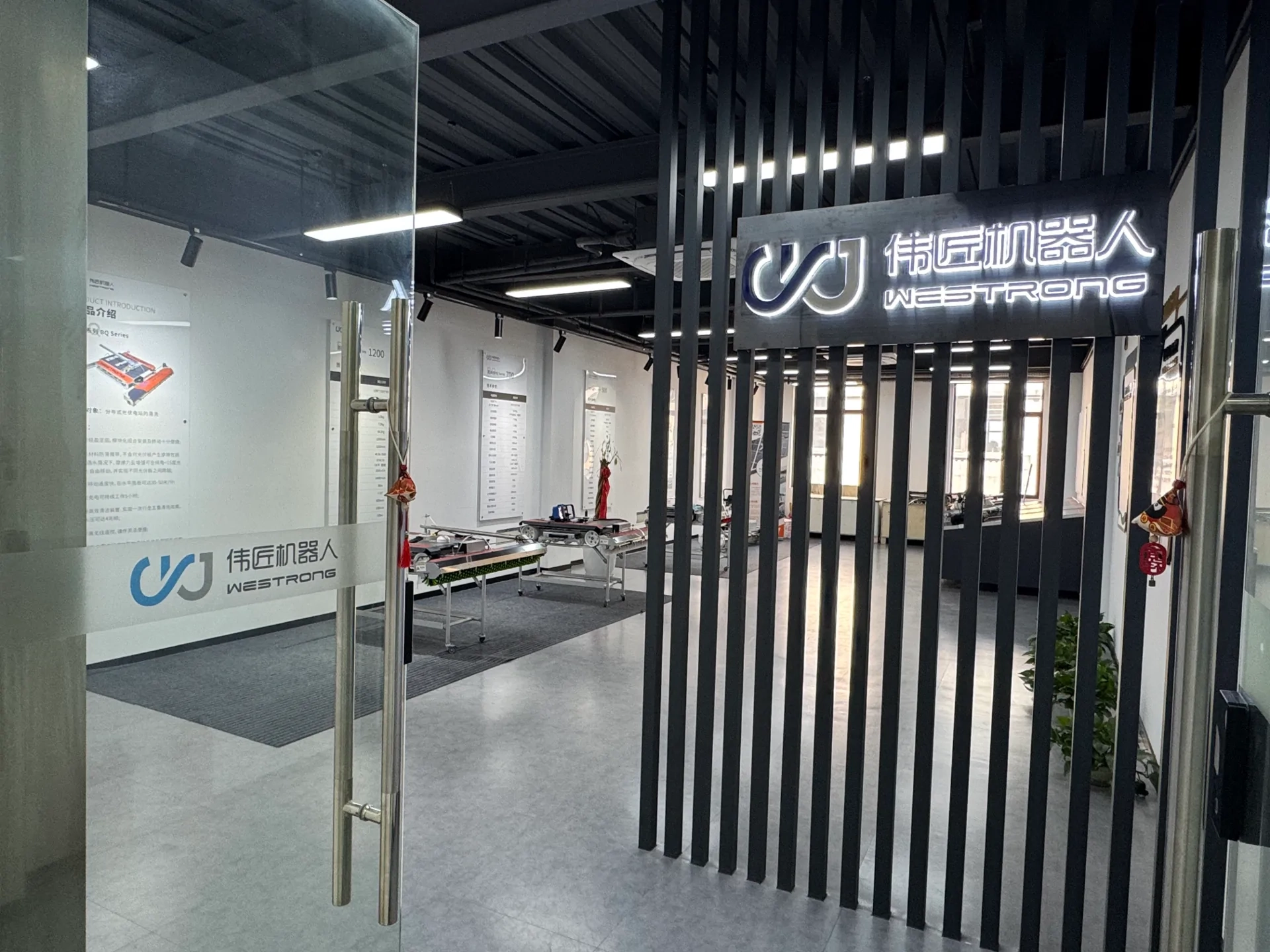
Shanghai Weijiang Robot Technology Co., Ltd., operating under the Westrong Robotics brand, has focused on industrial automation and PV cleaning equipment since 2016. Its development path includes early PV cleaning robot research, mass-production capability, O&M training support, customized cleaning solutions for dust removal, rust removal, and flexible panels, and planned fully automatic and agile product lines.
For solar asset owners, the useful question is not only “Which robot should we buy?” It is “How can navigation, scheduling, waterless solar panel cleaning, and fleet operations work together at our site?” For a site-specific discussion, schedule an expert consultation or send an inquiry for a customized solution.
Final Perspective
In 2027, the most valuable autonomous solar panel cleaning robot will not be judged only by travel speed or cleaning width. It will be judged by whether it can navigate reliably, clean at the right time, and operate as part of a visible fleet.
The market direction is favorable because solar deployment continues to grow. Yet the winning approach will remain site-specific. Use real soiling and performance data. Protect module surfaces. Treat water as a strategic resource. And manage robots as connected operating assets, not isolated machines.
References
- International Energy Agency: Renewables 2025: Renewable Electricity — global renewable capacity outlook and the role of solar PV. ([iea.org](https://www.iea.org/reports/renewables-2025/renewable-electricity))
- International Energy Agency: Renewable Energy Progress Tracker — projected annual renewable capacity additions through 2030. ([iea.org](https://www.iea.org/data-and-statistics/data-tools/renewable-energy-progress-tracker))
- IEA Photovoltaic Power Systems Programme: Understanding, Measuring, and Mitigating Soiling Losses in PV Power Systems — global soiling-loss range and mitigation context. ([iea-pvps.org](https://iea-pvps.org/fact-sheets/fs-soiling-losses/))
- IEA Photovoltaic Power Systems Programme: Soiling Losses: Impact on the Performance of Photovoltaic Power Plants — soiling impacts, measurement, and cleaning mitigation options. ([iea-pvps.org](https://iea-pvps.org/key-topics/soiling-losses-impact-on-the-performance-of-photovoltaic-power-plants/))
- National Renewable Energy Laboratory: Predicting Photovoltaic Soiling Losses Using Environmental Parameters — evidence on local environmental inputs and soiling prediction. ([osti.gov](https://www.osti.gov/servlets/purl/1480682))
- International Renewable Energy Agency: Digitalisation and AI for Transforming Power Systems — digital operations, predictive maintenance, interoperability, and data-management context. ([irena.org](https://www.irena.org/Publications/2026/May/Digitalisation-and-AI-for-transforming-power-systems))
Forecast note: Statements about 2027 describe likely operating directions based on published solar deployment, soiling, and digitalisation evidence. Actual robot performance and cleaning economics depend on site conditions, equipment design, energy value, and operating practices.