For a commercial rooftop solar portfolio, cleaning is often a labor problem before it becomes a dirt problem. Teams must schedule crews, control roof access, manage safety work, and repeat the same task across changing weather and dust conditions.
An autonomous O&M (operations and maintenance) approach changes that model. Instead of sending people onto the roof for every cleaning cycle, commercial operators can use a planned combination of site assessment, robotic cleaning equipment, deployment support, and maintenance training. This article explains why Westrong Robotics can package these capabilities into a practical path for reducing rooftop solar cleaning labor while protecting energy yield and operational control.
Why Commercial Rooftop Solar Cleaning Creates a Cost Problem
Dust, pollution, pollen, and other debris reduce the light that reaches a solar module. This is called soiling. It can look minor from the ground, but its business effect can grow across a large rooftop portfolio.
The IEA PVPS report on soiling losses in photovoltaic power plants describes soiling as the most influential factor on PV yield after irradiance. It estimates global annual energy losses of 3% to 5% from soiling. For an operations director, that means lost generation can become a recurring revenue and performance issue, not a cosmetic concern.
Manual commercial rooftop solar panel cleaning also creates a second cost layer. A work order may involve crew scheduling, travel, roof permits, safety preparation, weather checks, supervision, and cleaning records. The actual cleaning time is only part of the expense.
| Operating Challenge | What It Means for the O&M Team | Business Impact |
|---|---|---|
| Frequent manual roof access | Crews need access planning, safety controls, and supervision. | Higher labor hours and more complex scheduling. |
| Unclear cleaning timing | Teams may clean too early or wait too long. | Either unnecessary OPEX or avoidable energy loss. |
| Many roof sections | Different areas may collect dust at different rates. | One blanket cleaning plan can waste labor. |
| Safety exposure | Workers operate near edges, skylights, hatches, and electrical equipment. | More compliance work and greater operational risk. |
| Limited proof of work | Managers need clear records of what was cleaned and when. | Harder vendor control, budgeting, and performance review. |
Roof work must be treated seriously. The OSHA guidance for solar maintenance fall hazards notes that people who maintain solar panels can face roof-edge, skylight, ladder, and hatch hazards. Reducing routine human exposure to these areas supports safer maintenance planning.
The Autonomous O&M Solution for Commercial Solar Cleaning
Westrong Robotics positions autonomous cleaning as an O&M solution, not simply as a machine purchase. The package starts with industrial automation and robot engineering. It then applies those capabilities to solar cleaning equipment, site fit, operator support, and long-term service needs.
This model is useful for facility owners, EPC firms, O&M contractors, and asset managers who need commercial solar panel cleaning equipment that can work within real rooftop limits. These limits include module layout, roof access, row spacing, dust type, cleaning frequency, and the need to keep daily operations moving.
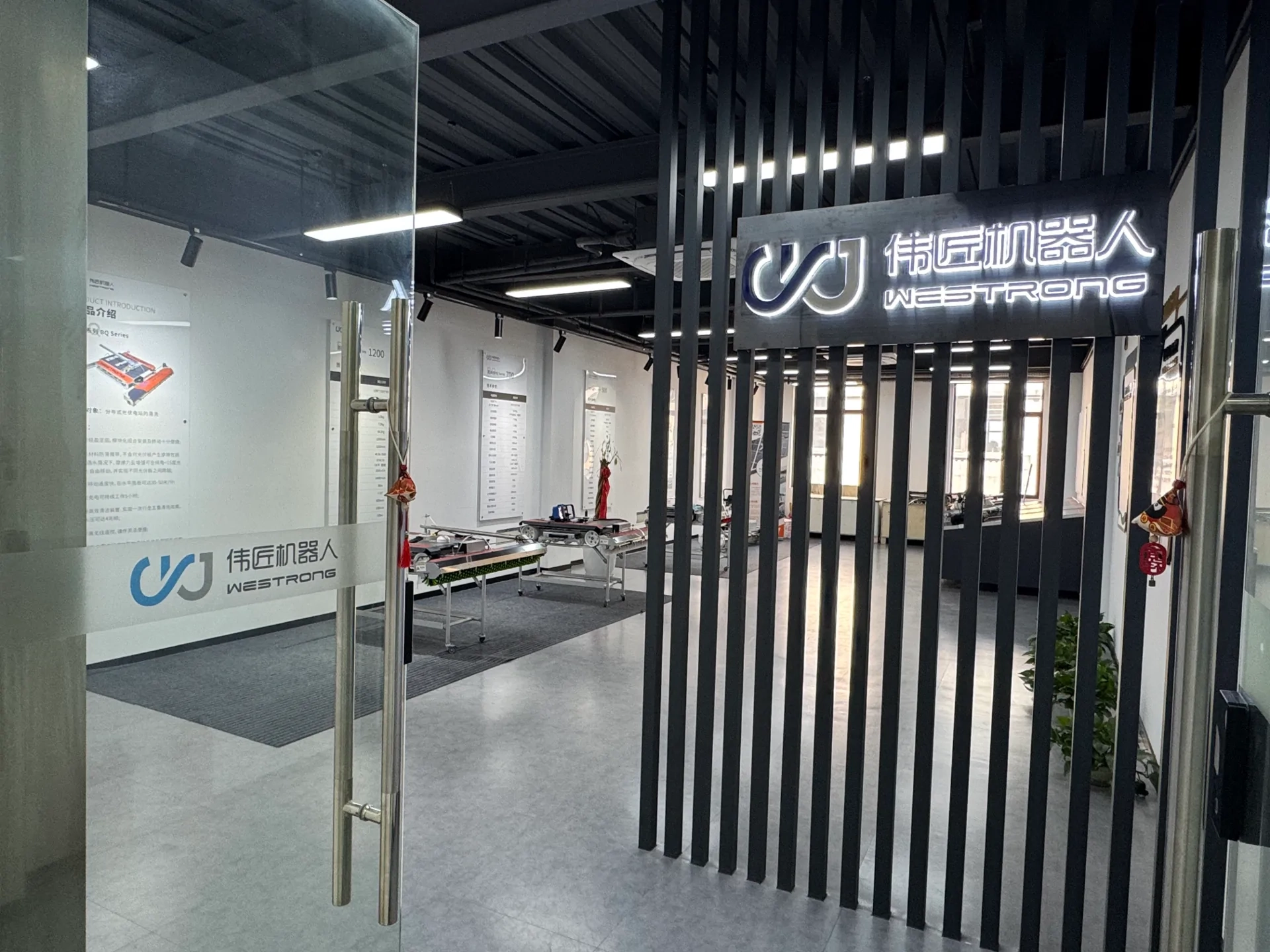
Founded in Shanghai in 2016, Westrong Robotics develops, designs, manufactures, and sells industrial automation robots. Its first photovoltaic cleaning robot was developed in 2017, followed by commercial production and an O&M training team in 2019. The company later introduced customized cleaning robots for dust removal, rust removal, and flexible-panel applications in 2023. In 2025, it released the BQ1300S and BQ1000S models. This product history matters because commercial rooftop solar cleaning needs a supplier that understands both automation equipment and field deployment.
How a Commercial Solar Cleaning Robot Creates Business Value
A commercial solar cleaning robot replaces repeated manual movement with a repeatable cleaning process. The operator manages the cleaning plan while the equipment performs the routine travel and cleaning work across suitable module rows.
The value is not only fewer labor hours. Automation can also help teams plan cleaning around actual site conditions, complete work more consistently, and keep better records of cleaning activity. This gives managers a clearer basis for comparing cleaning cost against energy recovery.
The U.S. Department of Energy discussion of solar cleaning optimization explains the central economic rule: cleaning should be timed by the balance between soiling-related production loss and cleaning cost. An autonomous system supports this rule because it lowers the labor burden of each cleaning event.
How Westrong Robotics Maps Automation to Rooftop O&M Pain Points
Reduce Repeated Cleaning Labor
The first pain point is simple: manual cleaning uses people for repetitive work. A rooftop solar panel cleaning equipment program can move that repeatable work from labor-intensive field activity to managed equipment operation.
Westrong Robotics builds on its industrial automation background to provide robot-based cleaning solutions. This approach is designed to reduce the number of people needed for routine cleaning cycles. It also helps O&M leaders use skilled staff for inspection, troubleshooting, quality checks, and higher-value maintenance work.
Make Cleaning Frequency More Rational
Cleaning every array on a fixed calendar may be easy to manage, but it may not be economical. Dust levels can change after nearby construction, dry weather, seasonal pollen, industrial activity, or rainfall.
The National Renewable Energy Laboratory's photovoltaic module soiling resource shows that soiling losses vary by site and time. It also explains that a soiling ratio of 0.95 represents a 5% annual energy loss. The practical lesson is clear: commercial rooftop solar panel cleaning should be based on local evidence, not a generic schedule.
Westrong's solution packaging supports a more disciplined process. First, the site is assessed. Next, the operating team defines cleaning priorities. Then, robotic cleaning can be deployed on a schedule that reflects real business needs. This does not require a manager to chase a perfect prediction. It provides a better way to connect cleaning effort to expected value.
Lower Routine Roof-Access Exposure
Robotic cleaning does not remove every rooftop task. People still need to inspect systems, manage equipment, and follow local safety rules. However, it can reduce the number of routine cleaning trips that place workers near roof edges, skylights, hatches, and live PV equipment.
This is a meaningful operational advantage. Fewer repetitive access events can mean less time spent on permits, safety preparation, crew coordination, and weather-related rescheduling. It also supports a more controlled maintenance routine.
Fit the Equipment to the Actual Array
Commercial roofs are not identical. Some sites have narrow work areas. Others have non-standard module layouts, flexible panels, dust-heavy zones, or access constraints. A generic machine can become an expensive compromise when it does not match these conditions.
Westrong Robotics has expanded beyond standard PV cleaning equipment with customized robots for dust removal, rust removal, and flexible-panel work. This engineering range helps the company discuss site fit before it recommends a cleaning approach. That is important for buyers who need solar panel cleaning equipment for commercial buildings rather than an off-the-shelf answer designed for a different type of array.
| Decision Area | Manual Rooftop Cleaning | Autonomous O&M with a Commercial Solar Cleaning Robot |
|---|---|---|
| Labor model | Labor rises with each cleaning cycle. | Operators manage equipment while reducing repeated manual cleaning work. |
| Safety exposure | More routine worker movement across the roof. | Can reduce routine roof-access activity for cleaning tasks. |
| Cleaning consistency | Can vary by crew, time pressure, and site conditions. | Supports a repeatable process when equipment is matched to the array. |
| Scheduling | Often driven by crew availability. | Can be planned around site need, cleaning value, and operating windows. |
| Management evidence | May depend on manual work records. | Supports clearer cleaning plans, service records, and review routines. |
| Long-term scalability | Requires more coordination as the portfolio grows. | Provides a standardized operating model across suitable sites. |
Why This Operating Model Is Credible
An autonomous cleaning strategy works when it is treated as part of the full O&M system. Equipment alone is not enough. The buyer needs reliable site documentation, a clear inspection method, trained operators, performance review, and a supplier that can support the deployment.
The IEC 62446-1 standard for PV documentation, commissioning, inspection, and maintenance sets out the importance of documented PV system information and inspection requirements. For a commercial buyer, this supports a practical procurement rule: cleaning equipment should fit into the site's documented O&M process rather than sit outside it.
The U.S. Department of Energy's solar O&M resources for plant operators also stresses that regular O&M supports optimal PV performance and helps reduce risk from issues such as soiling. It cites analysis of 2,200 California PV systems in which up to 8.3% of lost energy production could be recovered through optimal O&M. This does not mean every rooftop will recover the same amount. It shows why disciplined maintenance decisions matter.
The logic behind Westrong's package is therefore coherent:
- Industrial robot development provides the technical base for repeatable automated cleaning.
- PV cleaning specialization keeps the equipment focused on solar generation needs.
- Customized engineering helps align the solution with different roof and module conditions.
- O&M training helps the buyer turn equipment into a usable operating process.
- New product development, including the BQ1300S and BQ1000S released in 2025, supports an evolving commercial solar cleaning equipment portfolio.
How to Evaluate Rooftop Solar Panel Cleaning Equipment Before Purchase
A good procurement process starts with site facts. Do not begin with a machine specification alone. Begin with the cost and risk of the current cleaning method.
Collect the Right Internal Data
- Installed capacity, module count, roof sections, tilt, row layout, and access points.
- Cleaning history, labor hours, contractor cost, water use, and safety preparation time.
- Production data before and after cleaning, where available.
- Known dust sources, pollution sources, pollen periods, and rainfall patterns.
- Roof constraints such as skylights, parapets, walkways, drains, and restricted areas.
- Current O&M documentation, safety procedures, warranties, and inspection requirements.
Ask Suppliers Questions That Reveal Real Fit
- How will the commercial solar cleaning robot move across this specific module layout?
- What site conditions could limit deployment?
- What operator training and service support are included?
- How is cleaning activity recorded and reviewed?
- What maintenance does the robot require between cleaning cycles?
- Can the supplier provide a pilot or site-specific technical assessment?
- How will the proposed workflow reduce labor hours, safety exposure, or missed cleaning windows?
For many buyers, a pilot is the best next step. It lets the O&M team test the equipment on a real roof, verify operating steps, measure labor changes, and identify site-specific adjustments before a larger rollout.
A Practical Deployment Path for Commercial Rooftop Solar Cleaning
- Assess the portfolio. Group rooftops by layout, access difficulty, soiling pattern, and current cleaning cost.
- Choose a pilot site. Select a roof with clear cleaning demand and measurable operating data.
- Confirm solution fit. Review module type, roof conditions, safety process, equipment movement, and training needs.
- Run a controlled pilot. Compare cleaning labor, time, quality, and operational disruption against the existing method.
- Set the O&M playbook. Define cleaning triggers, operator duties, inspection points, maintenance tasks, and reporting rules.
- Scale by site type. Expand first to similar rooftops where the operating model is proven.
Westrong Robotics can support this path with product consultation, site-fit discussion, customized cleaning robot options, and O&M training. Its focus is not to promise identical results for every roof. Its role is to help each commercial operator build a cleaning system that fits the actual asset, labor model, and performance goal.
Frequently Asked Questions About Commercial Solar Panel Cleaning Equipment
Can a commercial solar cleaning robot remove all rooftop labor?
No. Teams still need equipment setup, inspection, oversight, maintenance, and safety management. The main value is reducing repetitive manual cleaning work and limiting routine roof-access activity.
When does autonomous commercial rooftop solar panel cleaning make sense?
It is most useful when a site has repeat cleaning demand, meaningful labor cost, difficult roof access, large module areas, or a portfolio that needs a more consistent O&M process.
How should a buyer compare rooftop solar panel cleaning equipment?
Compare site fit, labor reduction potential, cleaning consistency, safety workflow, service support, operator training, maintenance needs, and the supplier's ability to support a pilot.
Is robotic cleaning suitable for specialized PV surfaces?
Suitability depends on the module and roof conditions. Westrong Robotics has developed customized solutions for flexible-panel and other specialized cleaning needs, so the right process begins with a technical site assessment.
Build a Lower-Labor Solar O&M Model
Commercial rooftop solar cleaning should not force an O&M team to choose between high labor cost and avoidable soiling loss. A well-planned autonomous model can reduce repetitive roof work, improve cleaning consistency, support safer operations, and give managers better control of cleaning decisions.
Westrong Robotics brings together industrial robot development, photovoltaic cleaning specialization, customization capability, and O&M training to help commercial operators make that transition. For a site assessment, pilot discussion, or commercial solar panel cleaning equipment consultation, contact Westrong Robotics to evaluate your rooftop solar cleaning needs.