Solar panel cleaning robot cost depends on much more than the purchase price. Project size, panel layout, roof access, cleaning frequency, water use, labor rates, safety controls, and system automation all affect the total cost of ownership. This guide explains how to compare solar cleaning robot price, operating cost, expected output improvement, and long-term return on investment.
Whether you manage a commercial rooftop, industrial plant, floating solar site, agrivoltaic project, or utility-scale power station, the right cleaning system should match the site. You can review available solar panel cleaning robot products while using this guide to compare technical fit, service support, and project value. It answers key questions such as: What affects PV cleaning robot cost? How should buyers compare robot types? What information is needed for an accurate quote? How can automation reduce safety and maintenance costs?
What Does Solar Panel Cleaning Robot Cost Include?
A solar panel cleaning robot is not only a machine. It is part of a complete cleaning and maintenance system. The quoted price may include the robot body, brushes, drive system, battery, remote control, sensors, charging equipment, water system, software, spare parts, training, packaging, and technical support. Some projects also need custom mechanical parts, special transport equipment, or site modifications.
For this reason, a low solar cleaning robot price may not be the lowest total cost. A basic machine may require more labor, more manual supervision, or more frequent maintenance. A higher automation level may cost more at the start but reduce repeated labor and improve cleaning consistency. Buyers should compare the full lifecycle cost instead of comparing machine prices alone.
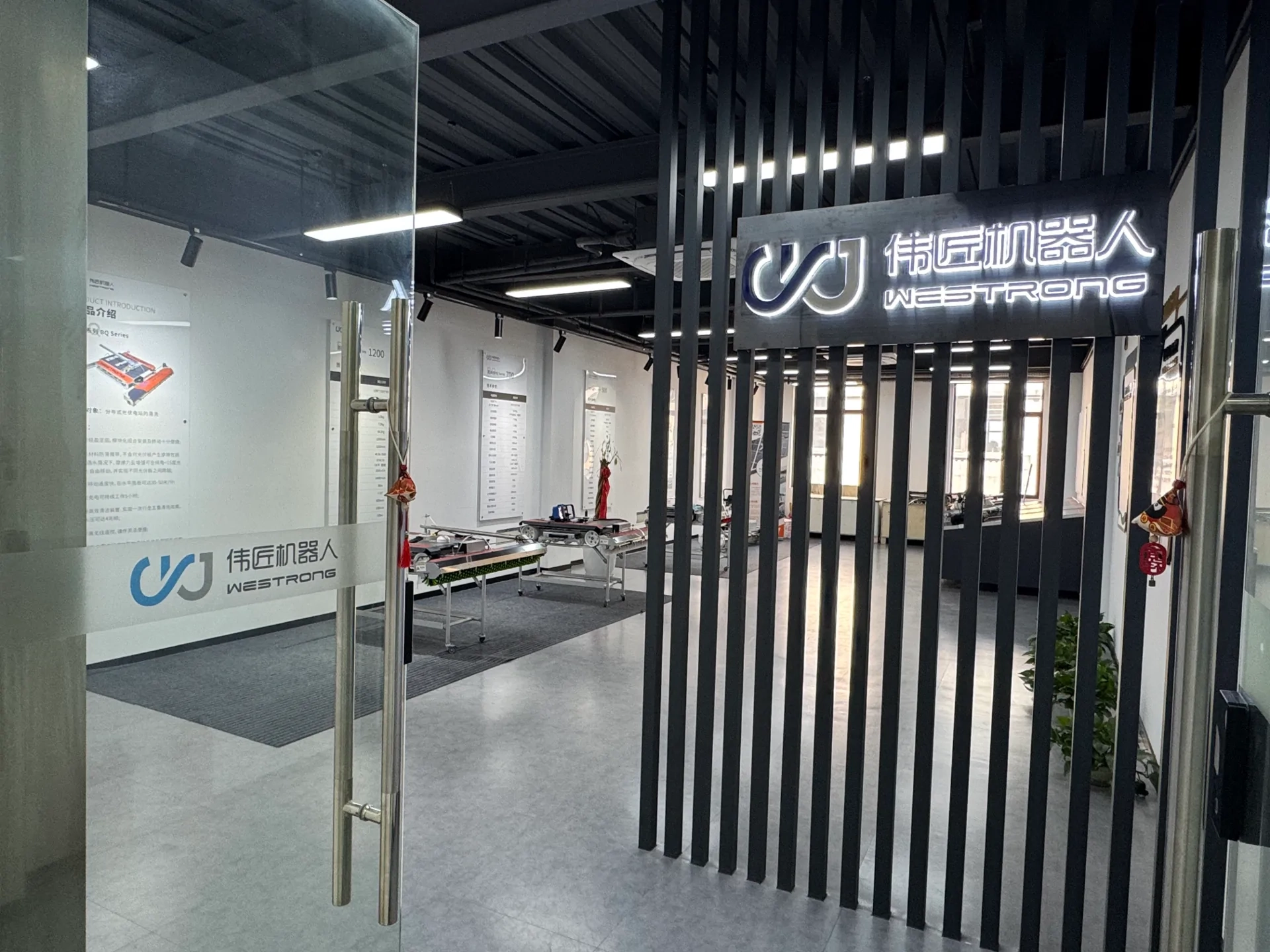
Westrong Robotics evaluates the project before recommending a standard model or a custom design. The review can include the project type, panel size, installation method, tilt angle, pollution type, cleaning frequency, automation level, and budget. This process helps prevent a common purchasing mistake: choosing a robot that looks suitable in a catalog but cannot work efficiently on the actual site.
Typical Cost Elements in a Solar Cleaning Robot Quote
| Cost Element | What It Covers | Questions Buyers Should Ask |
|---|---|---|
| Robot hardware | Frame, drive system, cleaning brush, battery, sensors, and control unit | Is the design suitable for the panel size, slope, gaps, and surface condition? |
| Cleaning system | Dry brush, wet brush, water route, dust removal, or combined cleaning method | Will the method protect anti-reflective coatings and reduce microcrack risk? |
| Automation level | Remote control, assisted operation, scheduled operation, or full automatic control | How much daily labor and supervision will still be required? |
| Customization | Special width, obstacle handling, slope adaptation, gap crossing, or control integration | Which changes are included in the quotation, and which require engineering fees? |
| Delivery and training | Packaging, transport support, user manuals, operator training, and commissioning guidance | Are spare parts, training documents, and remote support included? |
| Long-term support | Brush replacement, battery service, software support, troubleshooting, and spare parts | What is the expected maintenance cycle and response process? |
Why Solar Panel Cleaning Matters for ROI
Dust, pollen, bird droppings, industrial particles, oil residue, and chemical deposits block light from reaching the solar cells. This condition is known as soiling. The IEA PVPS report on soiling losses describes soiling as one of the most important factors affecting photovoltaic energy yield after irradiance. It also explains that cleaning decisions should consider both energy loss and cleaning expenditure.
Westrong Robotics’ project information states that severe dust can cause **25%–35%** power loss within several weeks in some conditions. For industrial sites, untreated pollution may reduce output by **17%–35%**, especially when fine particles, oil, and chemical deposits attach quickly to the module surface. These figures should not be treated as a fixed result for every site. They show why buyers should measure local soiling and compare cleaning frequency with lost production.
Rain does not always solve the problem. Research from the National Renewable Energy Laboratory found that rainfall did not fully remove pollen from several utility-scale PV sites. The study also reported performance improvements after mechanical wet-brush cleaning. This is useful for buyers in areas with frequent rain, because a rainy climate does not automatically mean that scheduled cleaning is unnecessary.
A Simple ROI Calculation
A practical ROI model compares the value of recovered energy with the complete cleaning program cost. Start with the average daily or monthly power loss caused by soiling. Then estimate the energy price, cleaning frequency, labor cost, equipment cost, water cost, safety cost, and maintenance cost. The calculation should also include the value of reduced downtime and lower worker exposure to hazardous areas.
One simple formula is:
Annual Cleaning Benefit = Recovered Energy Revenue + Avoided Labor Cost + Avoided Safety Cost − Robot Program Cost
The robot program cost may include depreciation, service, batteries, brushes, charging, software, operator time, and spare parts. Buyers should test the model under conservative assumptions. Use lower expected output recovery and higher maintenance costs when preparing a budget. This creates a more realistic business case for engineering and finance teams.
How to Compare Solar Cleaning Robot Price by Project Type
The best solar cleaning robot price depends on the site structure. A robot for a flat commercial rooftop may not suit an agrivoltaic field. A floating PV robot must manage water-side safety and access. A utility-scale plant needs high coverage, simple deployment, and reliable repeat operation. Buyers should first classify the project and then compare suitable equipment.
| Project Type | Main Cleaning Challenge | Important Selection Factors | Possible Equipment Direction |
|---|---|---|---|
| Commercial rooftop | Limited access, staff activity, roof obstacles, and safety concerns | Low noise, narrow passage, controlled movement, and low manual supervision | DS-1200 for narrow roof paths or IQ-1000 for larger automated layouts |
| Industrial rooftop | Fine dust, oil, chemicals, high roofs, and complex structures | Protection rating, strong cleaning ability, obstacle handling, and safety controls | BQ-1300S for complex terrain or a customized system |
| Agrivoltaic site | Low clearance, crop protection, narrow row gaps, and uneven ground | Ground clearance, row width, slope ability, low crop disturbance, and compact design | DS-1200, DQ-600, or BQ-1200S based on row spacing and site scale |
| Floating PV | Water-side access, fall risk, electrical hazards, and limited working space | Remote operation, stable movement, safety planning, and reduced need for boat work | JR Series, BQ Series, or IQ Series based on project scale and automation level |
| Utility-scale PV | Large area, high module count, and cleaning demand that exceeds manual capacity | Coverage rate, battery capacity, row access, fleet management, and service support | JR-2000 for row cleaning with LM gantry systems for large blocks |
Which Solar Panel Cleaning Robot Is Right for Your Site?
Equipment selection should begin with the physical limits of the installation. Check module length and width, row spacing, slope, panel gaps, frame height, cable position, roof edges, drainage paths, and nearby obstacles. Also identify the type of dirt. Loose dust may need a different brush setting from sticky oil, pollen, bird waste, or chemical residue.
Westrong Robotics supports project-based matching for different applications. The IQ-1000 is intended for larger commercial roof areas with a higher need for automation. The BQ-1300S is designed for more complex terrain. The DS-1200 is suitable for narrow roof passages. For agrivoltaic sites, the DS-1200 can serve restricted-clearance areas, the DQ-600 can fit very compact row conditions, and the BQ-1200S can support larger and flatter agricultural layouts.
For floating PV, the JR Series can support larger centralized arrays. The BQ Series can fit distributed ponds and small or medium reservoirs. The IQ Series is intended for scheduled and unmanned cleaning needs. For large land-based plants, combining the JR-2000 single-row robot with an LM Series gantry system can provide both row-by-row cleaning and high-capacity block cleaning.
Technical Limits to Confirm Before Ordering
Before requesting a solar cleaning robot quotation, confirm whether the supplier can support the project’s environmental and mechanical conditions. Westrong Robotics states that its customization scope can cover operating temperatures from **-20°C to 60°C**, **IP65/IP66** protection, slopes from **20° to 60°**, gaps up to **400 mm**, and cleaning widths from **600 mm to 2,400 mm**. Available control levels can range from remote operation to fully automatic AI-based operation.
These values should be checked against the final project design. A supplier should review actual drawings, photographs, panel specifications, and access conditions before confirming compatibility. Buyers should request a written technical matrix that lists the approved slope, gap, clearance, cleaning width, operating temperature, battery endurance, and emergency stop requirements.
How Automation Reduces Labor and Safety Costs
Manual cleaning can require workers, ladders, safety equipment, water systems, vehicles, boats, permits, and supervision. The cost grows when the site has a large roof, low-clearance structure, floating platform, or active industrial operation. Automation reduces repeated entry into these areas and can make the cleaning process more consistent.
For rooftops, OSHA notes that solar maintenance workers may face fall hazards near roof edges, skylights, and roof hatches. Its solar energy fall protection guidance explains that employers must use suitable fall protection measures for workers exposed to these hazards. A robot does not remove the need for a safe work plan, but it can reduce the number of routine cleaning tasks that require people to walk around panels or work close to roof edges.
For floating PV, robotic cleaning can reduce the need for workers to board floating platforms. This may lower exposure to falling into water, electrical contact, weather changes, and boat-related work. It can also reduce costs related to boats, safety equipment, and water-side work permits. The robot still needs a safe deployment and recovery method, clear operating rules, and emergency procedures.
Why Controlled Cleaning Protects PV Assets
Strong manual brushing can damage anti-reflective coatings and increase the risk of microcracks. These problems may not be visible during a basic visual inspection. A robot can use controlled brush pressure, repeatable movement, and a planned cleaning path. This helps protect the module surface and supports more stable long-term operation.
Buyers should ask how the equipment controls brush pressure, avoids sudden turns, handles panel frames, manages obstacles, and stops during abnormal conditions. They should also request cleaning tests on the actual module type when possible. The best cleaning machine is not always the one with the strongest brush. It is the one that removes pollution while protecting the surface and electrical reliability of the module.
Cleaning Capacity and Operating Efficiency
Cleaning capacity affects labor planning and the number of robots needed. Westrong Robotics states that its row-level equipment can reach up to **2,000 m²/h**, while its gantry system can reach up to **5,000 m²/h**. Actual performance depends on module layout, dirt type, movement speed, slope, obstacles, battery condition, water use, and the required cleaning result.
Capacity should therefore be tested under site conditions rather than treated as a universal promise. A machine may cover a large theoretical area per hour but deliver lower daily output if it needs frequent charging, repositioning, manual recovery, or obstacle handling. Ask suppliers to separate rated speed, effective cleaning coverage, daily operating time, and average operator time.
How to Build a Total Cost of Ownership Model
Total cost of ownership, or TCO, means the full cost of owning and operating the system over its useful service period. It is a better buying measure than the initial solar cleaning robot price. A TCO model should include the equipment purchase, installation, training, labor, energy, water, consumables, batteries, brushes, spare parts, software, service visits, and planned replacement.
For a fair comparison, calculate the cost per cleaned square meter. Divide annual cleaning program cost by annual effective cleaning area. Then compare this number with the value of recovered power and the cost of manual cleaning. This method helps compare different machine sizes and automation levels across different project types.
Include downtime in the calculation. A robot that cleans quickly but often stops may create more cost than a slightly slower robot with stronger reliability. Also include the cost of business disruption. Commercial buildings may need quiet cleaning during non-business hours. Industrial plants may need cleaning without interfering with normal production. Westrong Robotics focuses on stable and quiet automated cleaning that can reduce disruption during normal operations.
Important TCO Questions for Procurement Teams
- How many square meters must be cleaned each week or month?
- What percentage of the work can be completed without an operator on the roof or platform?
- How often must brushes, batteries, filters, sensors, or other parts be replaced?
- How long does one charge support normal operation?
- How much time is needed for charging, setup, recovery, and relocation?
- Can the supplier provide spare parts and remote technical support?
- What tests prove cleaning coverage, movement reliability, slope performance, and emergency stop response?
- Does the system support the required IP rating, temperature range, and target-market certifications?
What to Check in a Solar Cleaning Robot Supplier
A reliable solar cleaning robot supplier should provide more than a product brochure. The supplier should understand the project, review the site limits, recommend a suitable system, explain the cost structure, and support the equipment after delivery. This is especially important for OEM, ODM, and EPC buyers who need repeatable quality across multiple projects.
Westrong Robotics provides OEM manufacturing based on mature product platforms. This can support white-label and private-label production for distributors, EPC contractors, O&M companies, and solar asset owners. Its ODM service supports custom development for non-standard PV structures and special site conditions. Customization may include cleaning width, slope ability, gap crossing, protection rating, operating temperature, and control level.
The standard process covers requirement review, platform matching, engineering design, prototype or sample development, testing, pilot production, mass production, delivery, and after-sales support. This staged approach allows buyers to identify technical problems before large-volume production. It also creates a clearer path from concept validation to commercial delivery.
You can learn more about the company’s capabilities on the company and manufacturing information page. For direct project evaluation, buyers can begin through the Westrong Robotics website.
Quality Control and Delivery Checks
Quality control is a major part of PV cleaning robot cost because failures in the field can create lost production, emergency labor, and project delays. Westrong Robotics describes a manufacturing process that covers requirement assessment, engineering design, purchasing, precision machining, assembly, software installation, calibration, function testing, performance verification, final inspection, packaging, and delivery.
Before shipment, each machine is tested for movement, turning, brush operation, water flow, battery endurance, obstacle crossing, climbing, remote response, and emergency stop operation. Testing can also assess cleaning speed, coverage, working time, and cleaning effect on real or simulated PV modules. Additional validation may include water and dust protection, continuous operation, start-stop cycles, brush wear, and structural stability.
Westrong Robotics states that it performs **100% final quality control** before release. This inspection can cover appearance, dimensions, functions, performance, labels, accessories, manuals, certificates, packaging strength, moisture protection, shipping marks, and packing lists. The factory in Jilin, China supports ISO-compliant production and can support IP65, IP66, CE, and target-market certification requirements where applicable.
Buyers should ask for inspection records, test standards, acceptance criteria, spare-part lists, user manuals, training materials, and support contacts. A complete delivery package reduces the risk that a machine arrives on site but cannot be used efficiently by the operating team.
A Practical Buying Process for PV Cleaning Robot Cost Control
A clear buying process helps control both price and technical risk. Start by collecting project data before asking for a quotation. The supplier needs to know the panel type, array layout, slope, row spacing, gap size, pollution source, desired cleaning frequency, working hours, site obstacles, and required automation level.
Next, request a technical feasibility review. The review should cover mechanical structure, drive method, cleaning mechanism, battery capacity, control system, safety risks, and site compatibility. A supplier should identify any design limits before prototype development. This reduces rework, unexpected engineering fees, and delays during installation.
For custom projects, use a staged approval process. First approve the technical concept. Then review the prototype or sample. Conduct site testing under real conditions. Record cleaning coverage, speed, battery life, obstacle handling, slope performance, and operator workload. After optimization, approve a small pilot batch before mass production.
- Define the site: Record module dimensions, slope, row spacing, obstacles, pollution type, and access conditions.
- Set the operating target: Define cleaning frequency, coverage area, daily working time, and automation level.
- Compare suitable platforms: Match the project with a row-level robot, gantry system, floating PV robot, or custom design.
- Review the TCO: Include labor, safety, spare parts, charging, water, maintenance, and downtime.
- Test the design: Use a prototype or site trial to verify technical performance.
- Approve delivery standards: Confirm testing, packaging, documentation, training, and after-sales support.
Frequently Asked Questions
How much does a solar panel cleaning robot cost?
The final cost depends on the project type, robot model, cleaning width, slope, gap size, automation level, environmental protection, customization, quantity, and service requirements. A reliable quotation requires project data and an engineering review. The total cost should also include batteries, brushes, spare parts, training, delivery, and long-term support.
Which solar cleaning robot is suitable for agrivoltaic projects?
The suitable model depends on ground clearance, row spacing, panel size, slope, and crop conditions. DS-1200 is suitable for restricted-clearance environments. DQ-600 fits very compact row passages. BQ-1200S is more suitable for larger and flatter agricultural sites that require higher cleaning efficiency.
Can a cleaning robot be customized for non-standard solar panel layouts?
Yes. Westrong Robotics provides ODM development for non-standard PV structures and project conditions. Customization can cover temperatures from **-20°C to 60°C**, IP65/IP66 protection, **20°–60°** slopes, gaps up to **400 mm**, cleaning widths from **600 mm to 2,400 mm**, and control levels from remote operation to fully automatic AI operation.
What testing is completed before solar cleaning robots are shipped?
Westrong Robotics tests movement, turning, remote response, brush washing, water flow, sensors, battery endurance, climbing, obstacle crossing, and emergency stop response. It also checks cleaning efficiency, speed, coverage, continuous working time, water and dust protection, start-stop cycles, brush wear, and structural stability. The company states that it completes **100% final quality control** before shipment.
Conclusion: Choose the Lowest Total Cost, Not Only the Lowest Price
Solar panel cleaning robot cost should be judged by energy recovery, labor reduction, safety improvement, asset protection, cleaning consistency, and long-term serviceability. The right robot can help maintain module light transmission, support stable generation, reduce manual work, and protect the return on investment of commercial, industrial, floating, agrivoltaic, and utility-scale PV systems.
Before making a purchase, prepare accurate site information and request a technical feasibility review. Compare equipment capacity, automation level, TCO, testing standards, customization limits, delivery support, and spare parts. To discuss a standard machine, OEM production, ODM development, or a complete industrial cleaning solution, visit Westrong Robotics and submit your project requirements.