Solar panel cleaning is moving from a simple maintenance task to a measurable performance service. By 2027, solar panel cleaning robot manufacturers will compete on more than brush design, battery life, or cleaning speed. The stronger question will be: can the provider prove how cleaning improves energy yield, reduces operating cost, and protects the asset?
This shift matters because soiling remains a major source of lost solar generation. The IEA PVPS reports that dust, pollution, and biological debris cause average global energy losses of about 4% to 7%. Its earlier technical report estimated annual losses of 3% to 5%, with economic effects reaching several billion euros across the global PV industry.
This article examines the 2027 outlook for the global photovoltaic cleaning equipment market. It focuses on the shift from equipment sales to data-driven Cleaning-as-a-Service, or CaaS. The analysis is written for solar asset owners, EPC companies, operations managers, investors, and technology decision-makers.
Why Solar Cleaning Is Becoming a Performance Business
The global solar fleet continues to expand. According to IRENA, solar power added a record 452 GW of capacity in 2024. The IEA expects solar PV to account for around 80% of global renewable capacity growth through 2030.
More solar capacity creates a larger installed base that must be operated for 25 years or more. At the same time, dust, sand, industrial pollution, pollen, and dry weather can reduce energy output. A solar plant owner does not only need a robot. The owner needs a repeatable way to answer three business questions:
- When should the panels be cleaned?
- How much energy and revenue can cleaning recover?
- Can the work be completed without damaging modules or increasing water use?
Cleaning-as-a-Service answers these questions by combining robotic equipment, site data, cleaning plans, reporting, and ongoing technical support. The robot becomes part of a wider operating system for solar assets.
The Main Trend: From Robot Sales to Data-Driven Cleaning-as-a-Service
1. Cleaning Decisions Will Be Based on Site Data
Traditional cleaning often follows a fixed schedule. A team may clean every two weeks, once a month, or after a visible dust event. This method is easy to understand, but it may clean too often in one season and too late in another.
Data-driven cleaning uses information from soiling sensors, weather stations, plant output, module conditions, and local operating records. The goal is simple: clean when the value of recovered energy is greater than the cost and risk of cleaning.
The IEA PVPS notes that soiling is not evenly distributed. Conditions can differ between modules, rows, and parts of the same site. This means a single cleaning schedule may not be suitable for every location.
For solar panel cleaning robot manufacturers, this creates a new product requirement. A robot should not only move across a panel. It should help collect useful operating data and support better cleaning decisions.
Key drivers
- Large solar farms need lower operating costs per megawatt.
- Dry regions face frequent dust and limited water supply.
- Asset owners want clearer proof of maintenance value.
- Digital monitoring tools make site-level analysis easier.
Value chain impact
Suppliers will need to provide sensors, software interfaces, service reports, and technical support. EPC companies may include cleaning data systems in plant design. Operators will spend less time planning routine work and more time reviewing exceptions, risks, and energy results.
2. Service Contracts Will Become More Important Than One-Time Sales
Equipment sales usually create revenue at the time of delivery. Cleaning-as-a-Service creates a longer relationship. The customer may pay through a monthly fee, a seasonal service contract, a per-megawatt model, or a performance-based agreement.
The service can include robot deployment, maintenance, operator training, spare parts, cleaning schedules, site reports, and remote technical support. This model gives asset owners a clearer operating budget. It can also reduce the need for the customer to build a large internal cleaning team.
However, a service contract must define measurable results. A provider should explain how it will record cleaning cycles, working hours, fault events, water use where relevant, and changes in plant performance. The contract should also state what the provider can and cannot guarantee, because weather and soiling conditions are outside the provider's full control.
Key drivers
- Solar asset owners want predictable operations and maintenance costs.
- Remote and large-scale sites are difficult to staff continuously.
- Robots require scheduled inspection, software updates, and spare parts.
- Customers increasingly value service quality over the lowest equipment price.
Value chain impact
Manufacturers will need stronger after-sales teams and clearer service processes. Distributors may become regional service partners. Plant owners will compare suppliers through total cost of ownership, response time, reporting quality, and long-term reliability.
3. Reliability and Module Protection Will Define Competitive Advantage
A cleaning robot works in a demanding environment. It may face high heat, strong wind, sand, uneven surfaces, long operating hours, and limited access to maintenance staff. The machine must also clean without scratching glass, damaging coatings, or placing harmful stress on modules.
The IEA PVPS technical report explains that cleaning systems should be tested for electrical safety, electromagnetic compatibility, power and water efficiency, harsh environmental conditions, slope performance, cleaning speed, and mechanical durability.
This is important because a low purchase price does not represent the full cost of ownership. A robot that causes downtime, requires frequent repairs, or creates module damage may reduce the value of the solar plant.
Key drivers
- Solar plants are becoming larger and harder to service manually.
- Module designs and installation layouts continue to change.
- Customers need equipment that can operate across different site conditions.
- Insurance, safety, and asset protection requirements are becoming more important.
Value chain impact
Manufacturers will need stronger testing records and clear operating limits. Buyers will assess brush materials, navigation, traction, battery performance, cleaning pressure, emergency controls, and maintenance access. Product documentation will become part of the sales decision.
What the Data Says About the 2027 Market
The available evidence supports a strong long-term need for efficient solar cleaning. It does not support a single guaranteed market size for Cleaning-as-a-Service in 2027. The market will differ by climate, plant size, labor cost, water availability, module design, and local service capacity.
The chart shows why cleaning decisions should be site-specific. A plant with low soiling may not need frequent cleaning. A plant in a dry, dusty location may require more regular service. The right business model is therefore based on measured conditions, not a universal cleaning promise.
| Market condition | Likely customer need in 2027 | Commercial response |
|---|---|---|
| Large utility-scale plants | Lower labor cost and better service visibility | Fleet deployment, remote monitoring, and service contracts |
| Dry and dusty regions | Frequent cleaning with low water use | Dry-cleaning robots and site-specific schedules |
| Remote solar assets | Fewer site visits and faster fault response | Remote diagnostics, local partners, and spare-parts planning |
| Mixed module and tracker layouts | Flexible equipment and accurate operating limits | Modular robots, field testing, and configuration support |
Opportunities and Challenges
Business opportunities
- Recurring service revenue from multi-year maintenance contracts.
- Higher customer value through energy-yield reporting.
- New partnerships with EPC firms, O&M providers, and asset managers.
- Specialized solutions for dusty, remote, or water-limited sites.
- Software and data services linked to robot fleets.
Business challenges
- Different module types and site layouts can limit equipment compatibility.
- Extreme weather can reduce operating windows and service reliability.
- Customers may find it difficult to connect cleaning activity with energy gains.
- Service contracts require local support, training, and spare-parts capacity.
- Performance claims must account for weather, irradiance, plant downtime, and other variables.
Practical Actions for Industry Decision-Makers
For strategic decision-makers
- Move from a product-only sales plan to a combined equipment and service model.
- Define the customer outcome before defining the robot specification. The outcome may be lower labor cost, higher availability, lower water use, or better reporting.
- Build a standard performance dashboard that records cleaning cycles, fault events, site conditions, and operating results.
- Use pilot projects to prove total cost of ownership before expanding across a large fleet.
- Develop regional service partnerships for installation, training, maintenance, and emergency response.
For operations and technical managers
- Measure current cleaning cost, cleaning frequency, water use, labor hours, and plant downtime.
- Record soiling conditions by site zone instead of treating the full plant as one uniform surface.
- Test the robot on the actual module type, tracker design, slope, and surface conditions.
- Set clear inspection rules for brushes, wheels, batteries, sensors, and safety controls.
- Compare cleaning results with plant performance data, while separating cleaning effects from weather and equipment outages.
For investors and asset owners
- Evaluate cleaning solutions through lifetime cost, not only the initial equipment price.
- Ask for evidence of field reliability and maintenance response time.
- Review how the provider measures energy recovery and handles uncertain results.
- Check whether the supplier can support the equipment after the warranty period.
How Shanghai Weijiang Robot Technology Co., Ltd. Can Create Value
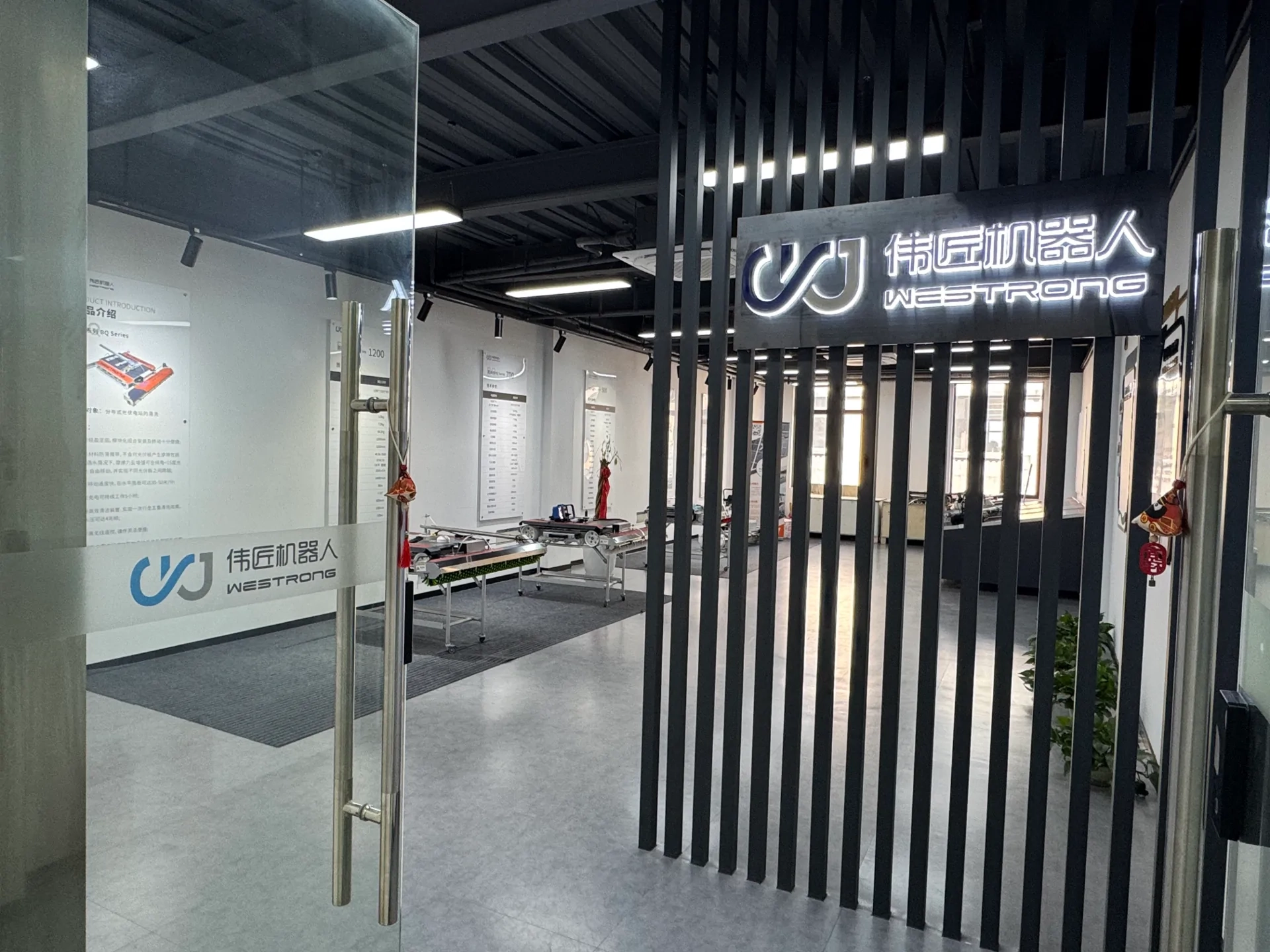
Shanghai Weijiang Robot Technology Co., Ltd., operating under the Westrong Robotics brand, has focused on industrial automation robots and photovoltaic cleaning equipment since its establishment in Shanghai in 2016. Its capabilities cover robot research and development, design, manufacturing, sales, and service.
The company developed its first photovoltaic cleaning robot in 2017, began volume production in 2019, and later introduced customized cleaning robots for dust removal, rust removal, and flexible solar panels. Its BQ1300S and BQ1000S products were released in 2025, with additional fully automatic and agile robot lines planned for 2026.
This background supports a practical path toward Cleaning-as-a-Service. The first step is not to promise a universal result. It is to connect equipment capability with a clear service process: site assessment, robot selection, deployment, operator training, maintenance, data collection, and performance review.
For asset owners and project developers, contact the Westrong Robotics team to discuss a site-specific cleaning solution or submit an inquiry for equipment and service planning.
Frequently Asked Questions
Will equipment sales disappear by 2027?
No. Equipment sales will remain important, especially for customers with their own O&M teams. The main change is that more customers will expect equipment, training, software support, maintenance, and performance reporting as one complete solution.
What is Cleaning-as-a-Service?
Cleaning-as-a-Service is a service model that combines robotic equipment with scheduled cleaning, maintenance, monitoring, reporting, and technical support. The customer pays for an operating result or service capacity rather than only buying a machine.
Does every solar plant need frequent robotic cleaning?
No. Cleaning frequency depends on local soiling, rainfall, plant design, module condition, labor cost, water access, and the value of recovered energy. Site data should guide the schedule.
What should buyers compare when selecting a manufacturer?
Buyers should compare cleaning quality, module protection, reliability, energy use, water use, safety controls, operating limits, service response, spare-parts access, data reporting, and total cost of ownership.
References
- IEA PVPS: Understanding, Measuring, and Mitigating Soiling Losses in PV Power Systems. Provides the 2025 estimate that soiling causes approximately 4% to 7% global energy losses and discusses sensors, forecasting, and cleaning strategies.
- IEA PVPS: Soiling Losses — Impact on the Performance of Photovoltaic Power Plants. Reviews soiling measurement, economic effects, cleaning technologies, testing, and operational risks.
- International Renewable Energy Agency: Renewable Capacity Statistics 2025. Reports 452 GW of new solar capacity added globally in 2024.
- International Energy Agency: Global Renewable Capacity Is Set to Grow Strongly, Driven by Solar PV. States that solar PV is expected to account for around 80% of global renewable capacity growth through 2030.