Custom Solar Cleaning Robot Development Proces
See how Westrong develops custom solar panel cleaning robots, from feasibility assessment to mass production, for OEM, ODM, and EPC buyers.
How We Develop Your Custom Robot
01
Requirement Consultation
Clients provide details on the project scenario, photovoltaic module specifications, installation method, tilt angle, contamination type, cleaning frequency, automation level, and budget requirements.
Why it matters:
A thorough understanding of on-site conditions is essential to developing a workable custom solution.
Why it matters:
A thorough understanding of on-site conditions is essential to developing a workable custom solution.
02
Engineering Feasibility Assessment
Our engineering team evaluates the mechanical structure, traveling method, cleaning mechanism, battery capacity, control system, safety risks, and on-site compatibility.
Why it matters:
Identifying technical risk before custom development begins reduces rework and development costs.
Why it matters:
Identifying technical risk before custom development begins reduces rework and development costs.
03
Solution Design and Quotation
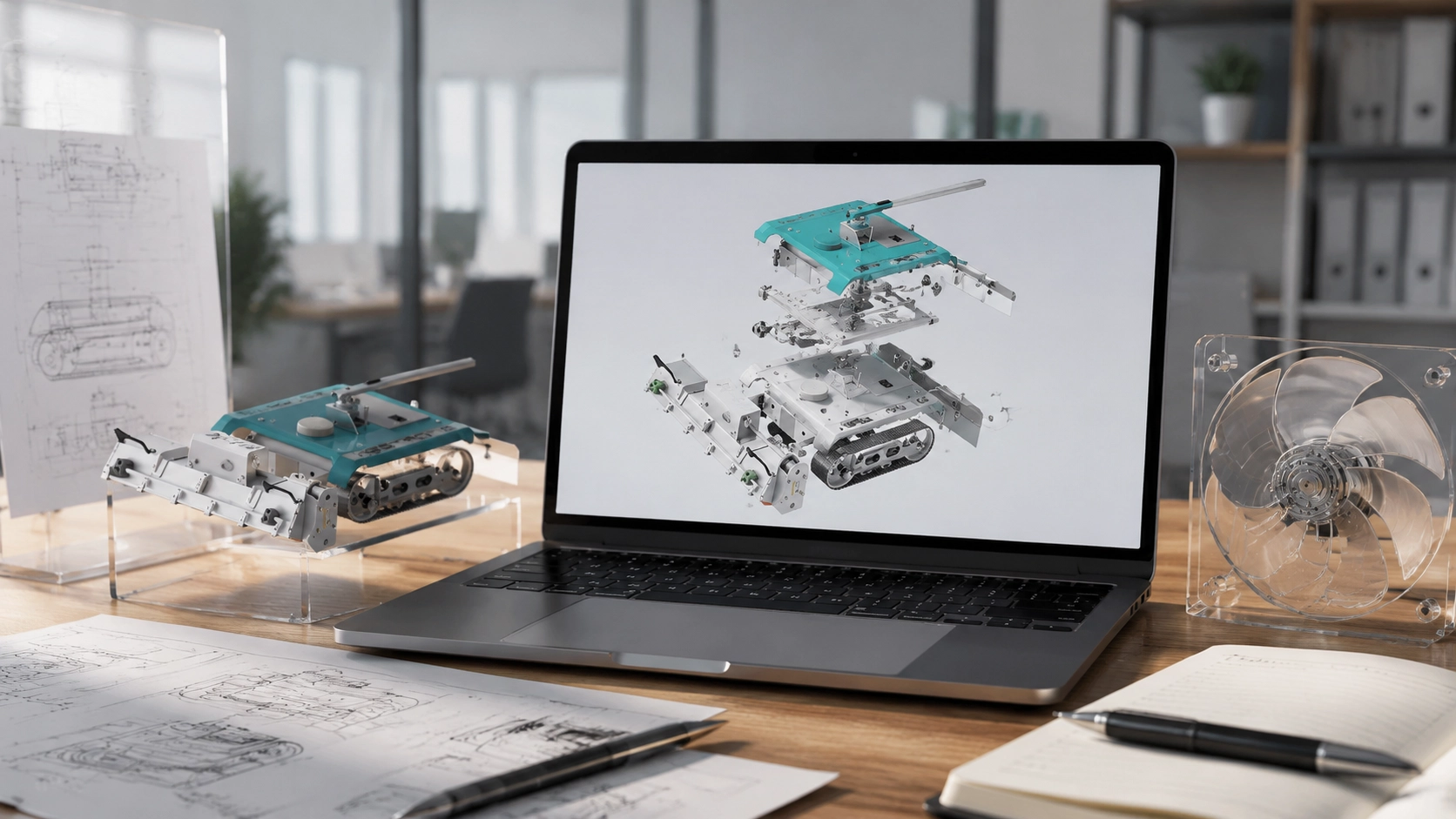
We deliver a technical proposal, structural sketches or CAD drawings, core configuration, expected performance, development timeline, and a detailed quotation.
Why it matters:
A clear solution and quotation help clients assess cost, timeline, and technical feasibility.
Why it matters:
A clear solution and quotation help clients assess cost, timeline, and technical feasibility.
04
Prototype Development
Based on the confirmed solution, a prototype is manufactured with preliminary integration of the mechanical structure, electrical system, cleaning mechanism, and control program.
Why it matters:
Prototype validation transforms a conceptual solution into a testable physical unit.
Why it matters:
Prototype validation transforms a conceptual solution into a testable physical unit.
05
Field Testing
The prototype is tested in the client's photovoltaic array or a simulated environment, with cleaning efficiency, battery endurance, navigation stability, obstacle-crossing capability, and safety performance recorded.
Why it matters:
Field testing exposes issues that cannot be identified in a laboratory environment.
Why it matters:
Field testing exposes issues that cannot be identified in a laboratory environment.
06
Optimization
Based on test results, the structure, brush system, traveling system, battery configuration, control program, and safety protection logic are refined.
Why it matters:
Optimization determines whether the custom product is truly suited for long-term operation at the client's site.
Why it matters:
Optimization determines whether the custom product is truly suited for long-term operation at the client's site.
07
Small-Batch Trial Production
A small production batch is run to validate assembly processes, component consistency, testing standards, and production efficiency.
Why it matters:
Trial production reduces quality risk before moving directly into mass production.
Why it matters:
Trial production reduces quality risk before moving directly into mass production.
08
Mass Production
Once the process is finalized, the project moves into standardized batch manufacturing, with production scheduling and quality control carried out according to order requirements.
Why it matters:
Mass production capability determines whether the custom solution can be delivered reliably and at scale.
Why it matters:
Mass production capability determines whether the custom solution can be delivered reliably and at scale.
09
Factory Acceptance
Functional, performance, appearance, accessory, and packaging acceptance checks are carried out according to the technical standards confirmed with the client.
Why it matters:
Factory acceptance ensures the delivered equipment matches the confirmed solution.
Why it matters:
Factory acceptance ensures the delivered equipment matches the confirmed solution.
10
Delivery and After-Sales Support
We provide equipment delivery, operational training, user manuals, spare parts support, remote technical support, and ongoing maintenance service.
Why it matters:
Comprehensive after-sales support lowers the barrier to adoption and improves long-term equipment performance.
Why it matters:
Comprehensive after-sales support lowers the barrier to adoption and improves long-term equipment performance.